What’s your advice on building a career as an illustrator?
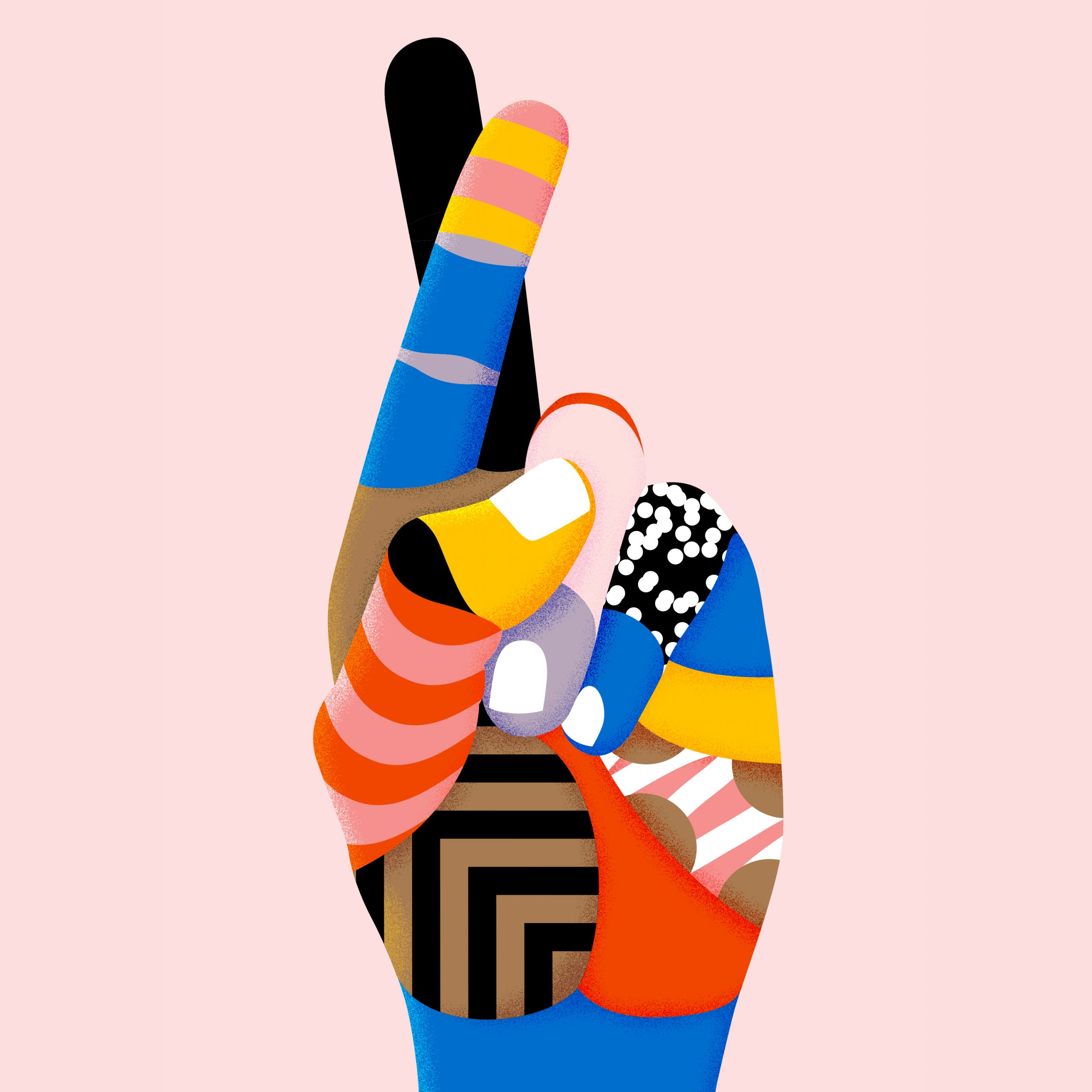
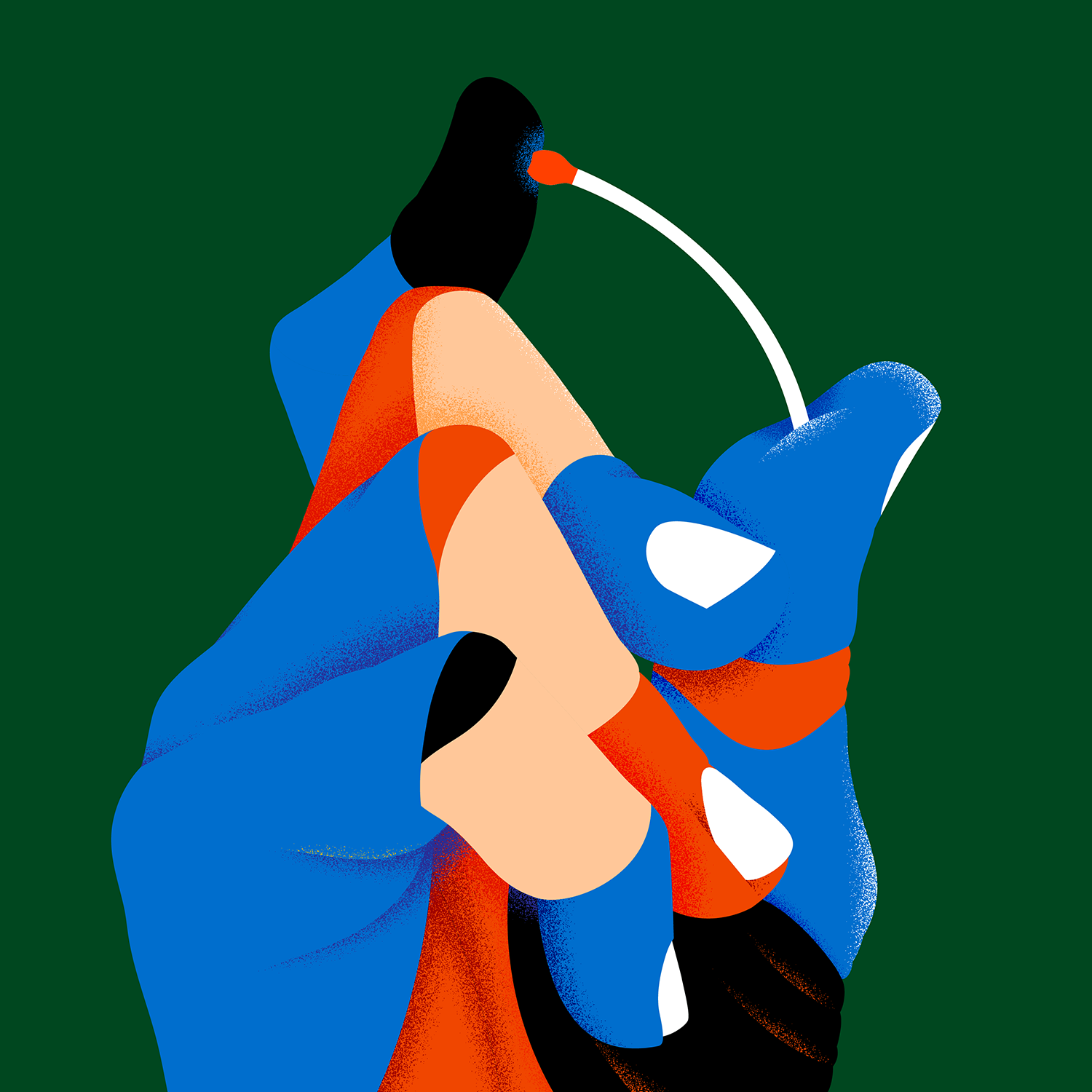
The best advice I could share is show the work that you want to be commissioned for. If you are going to show a range of different works, whether it’s UI design, identity or branding as well as illustration then it shows that you dabble in all these different trades. But if your intention is to be an illustrator, show the specific work that you want to be commissioned for. I started getting commissions just for illustrations because that’s all I was showing. I know that’s easier said than done. In fact it’s quite challenging.

That’s true. How did you manage the challenges that came your way while freelancing?
I have freelanced in two parts. First when I was living in Melbourne, and then when I moved to Tokyo. During the first stint, I realized that I would have to take on a lot of different projects in order to sustain myself. You won’t necessarily show these projects because they’re the ones that keep the lights on and pay the rent. The second time, I was working full time but still making personal work on the side, which meant that I didn’t need to do any of the work that I wasn’t necessarily interested in. It was like a seesaw, where the balance just tipped and I could just focus on doing illustration-based projects without having to take on the things that I didn’t want to.
What is your illustration process when a brief is involved?
When a brief is involved, I divide my process into three stages. First, it’s really helpful to actually talk to the person you are working with on the phone. As much as I love emails and hiding behind my computer, it’s really important to build a connection with the person that you are working with and establish a bit of a rapport. So having that phone call is really, really important because you understand what the expectation is. If it’s a new client and they want to take things a bit slowly and incrementally, I will start with black and white sketches to the point where I feel like I’ve exhausted all the different ideas that I can come up with.
Then I choose the ideas I feel are the strongest, presenting either one route or five routes depending on where I think the strength is. Along with the client, I choose the sketch from the previous round, and take it to an advanced level and get more feedback. And then essentially take it to the finish line for the third round and then get more feedback. It’s a process where I am actually intensely workshopping with the client.
That’s a very collaborative process. How do you proceed when there’s no brief?
I don’t take on projects without a brief. The only time it would be without a brief is if it was me. Usually, I have visual ideas late in the night. I type them out on my computer and when I actually have time to draw, I try to make sense of it. (Laughs) I drag in a bunch of images that evoke something or a bunch of words or an idea or a song. It’s a process that moves a lot quicker because I have a clearer vision, and I think that’s essentially the difference between art and design slash illustrations.
How did the brief for Kyoona result in the Echo bed-set?
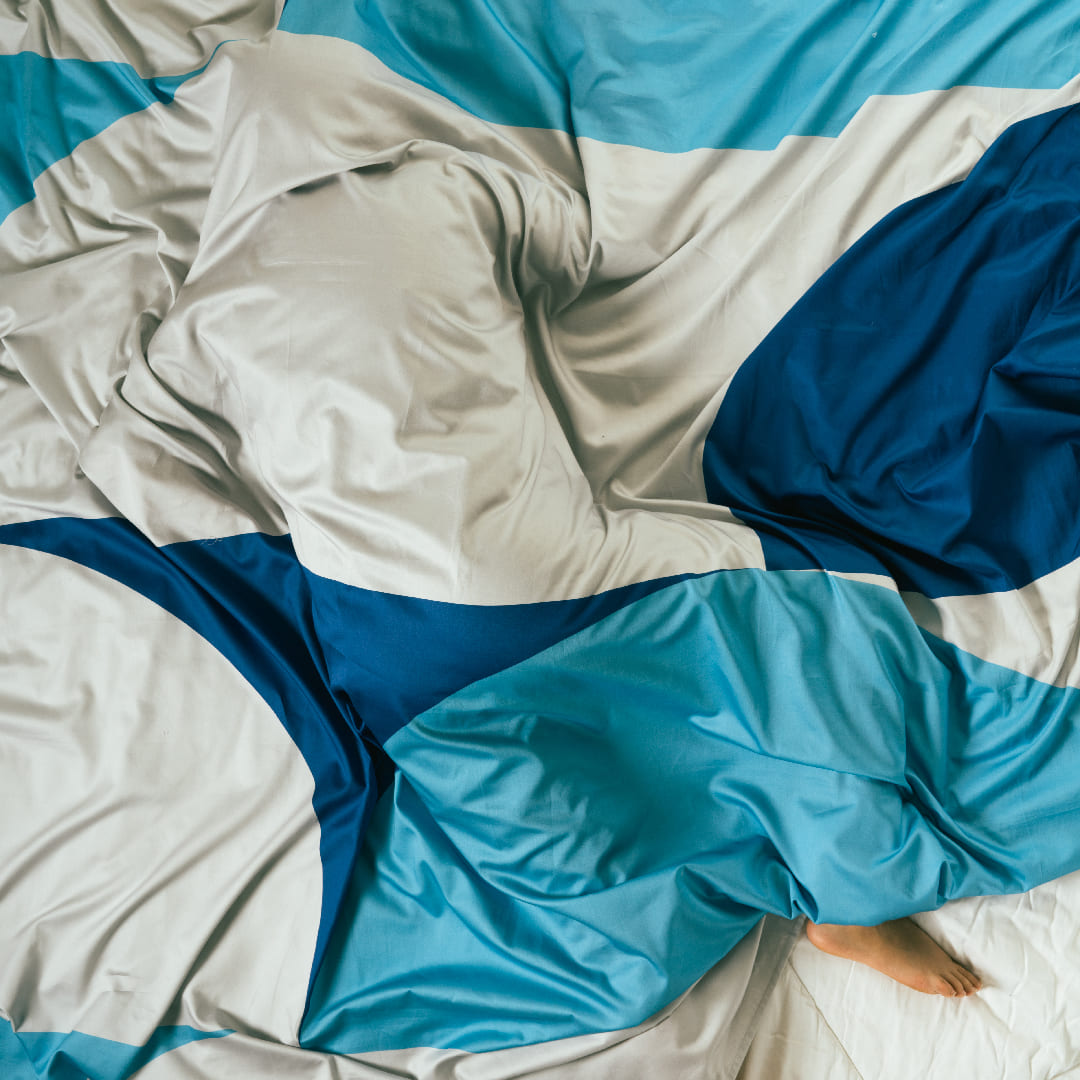
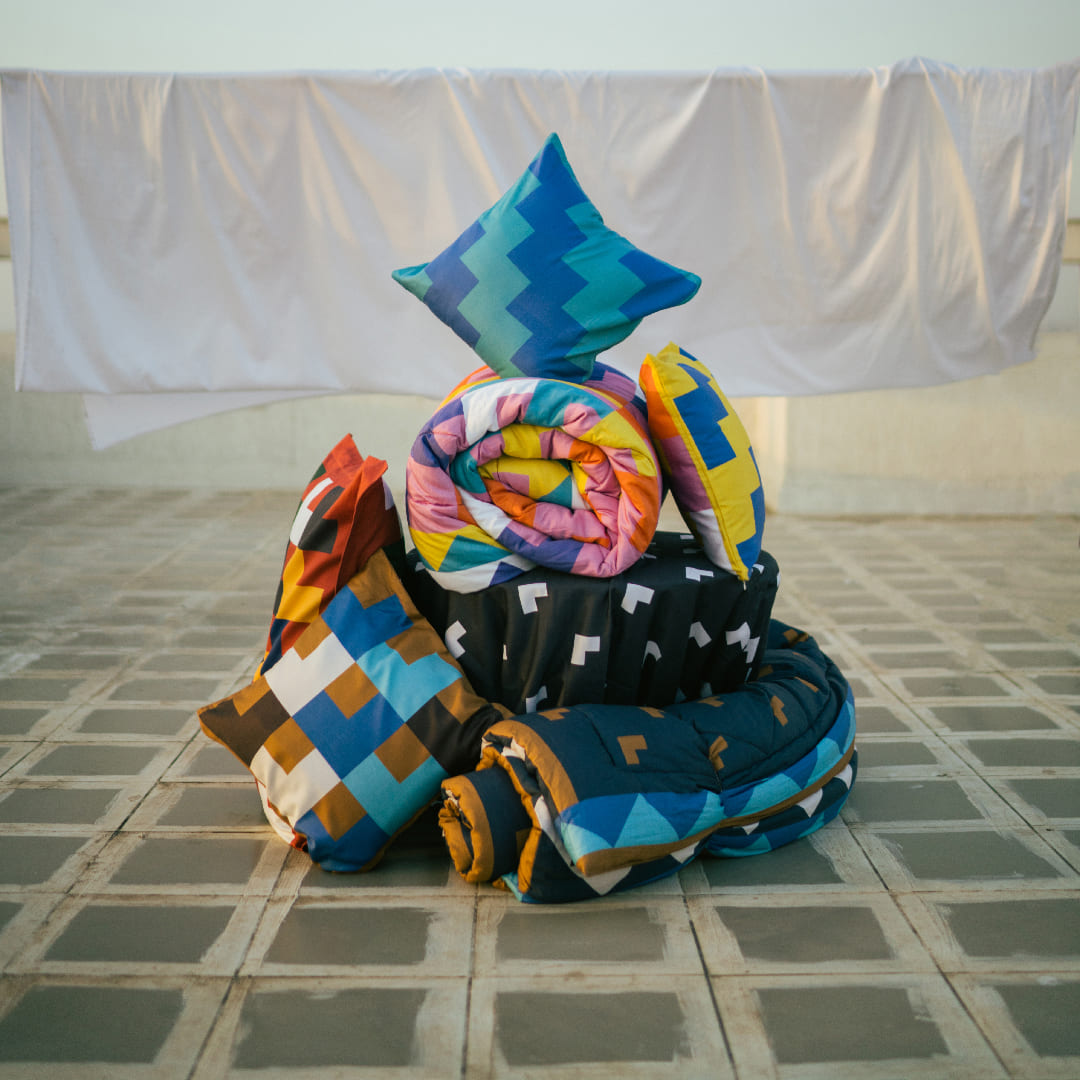
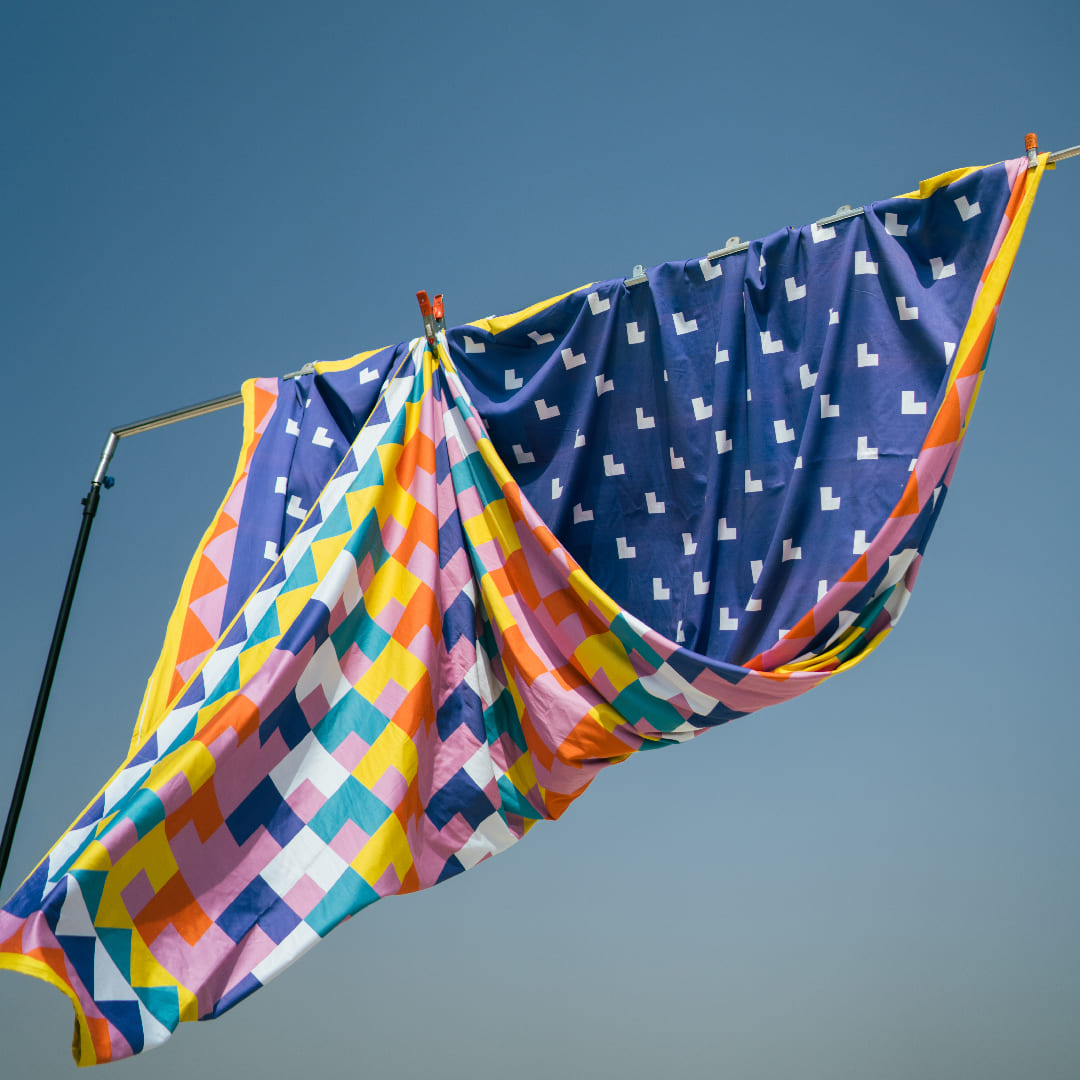
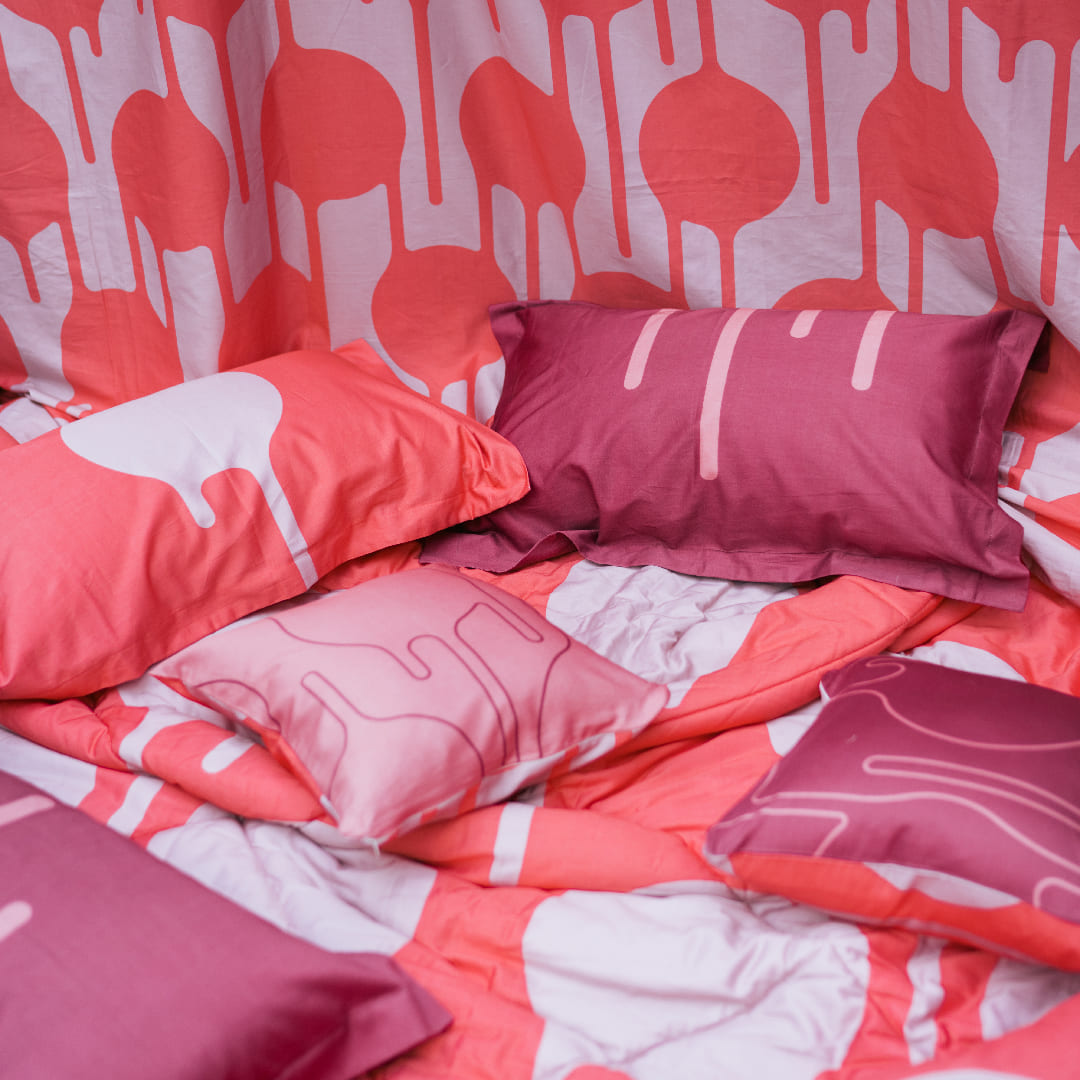
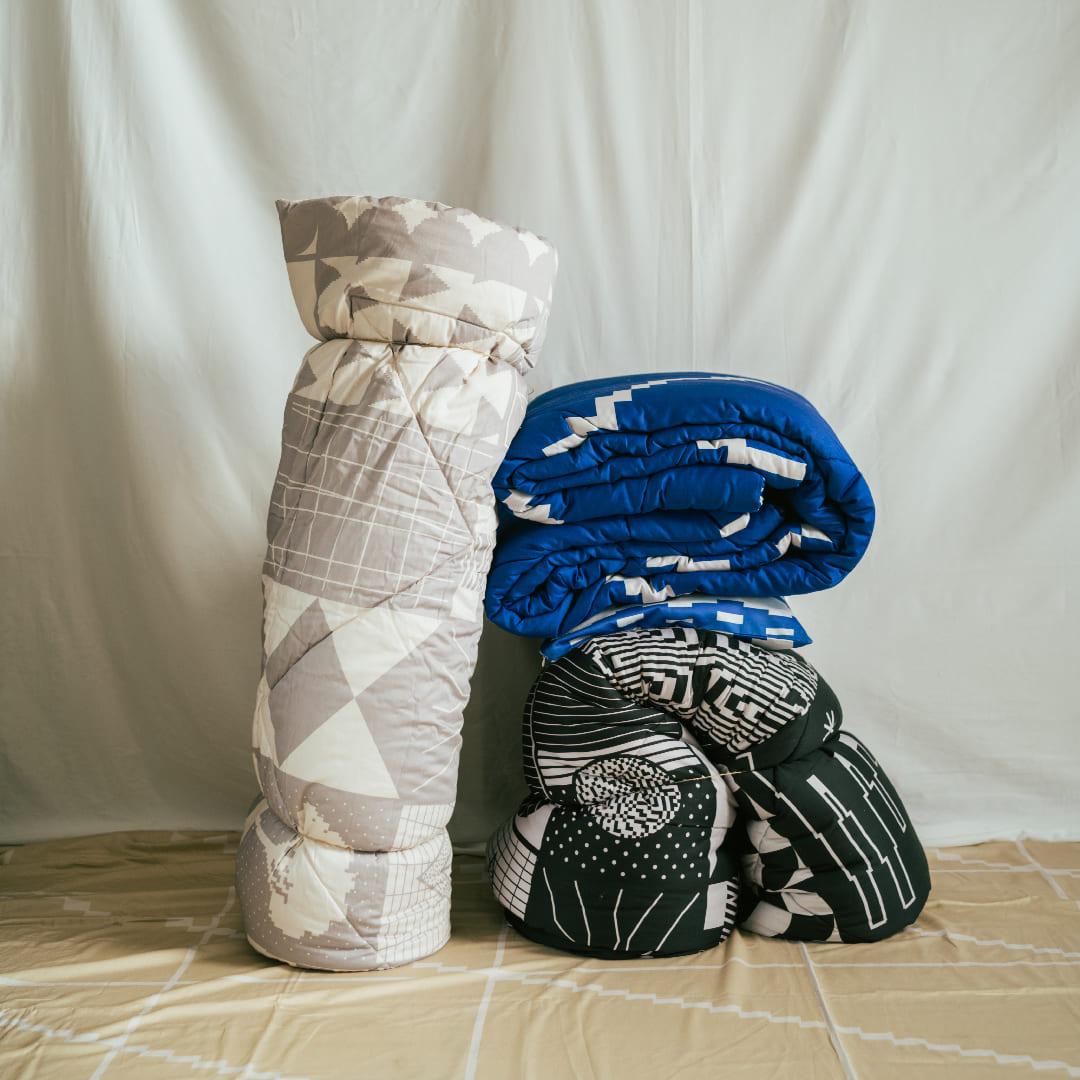
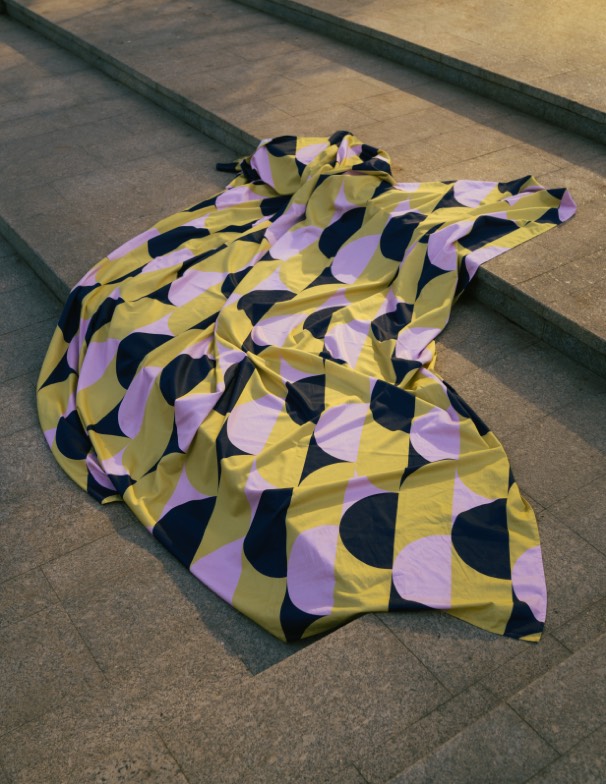
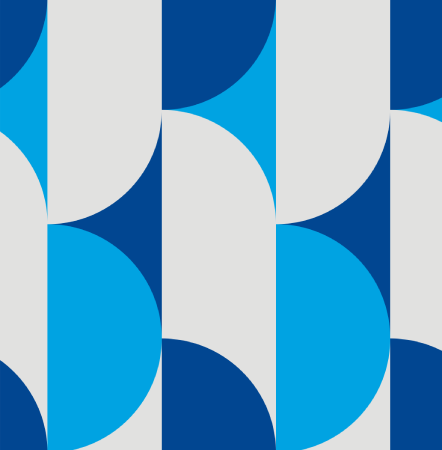
The whole brief that was shared by Kyoona was that they wanted to use dots. The Echo bed set was inspired by the idea of sound waves, the idea of reverberation. That was simply it. We went through different patterns and concepts. I should tell you that as much as I love illustrations, pattern making is one of my favorite things to do, and I can just get lost doing it. It became an obsession a while ago where I would make tens of patterns every day, just nonstop. I found it such an awesome, fascinating world to get lost in. And for this project, it was really fun to go back to patterns.
How do you create these patterns?
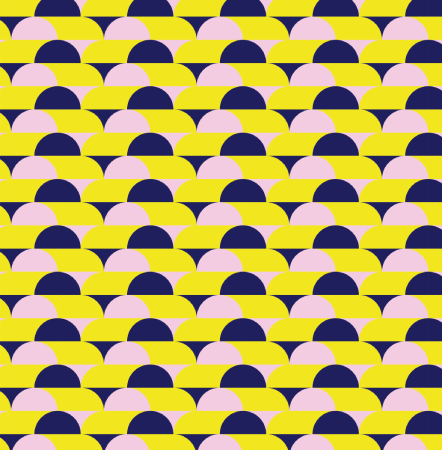
I start with a few elements and then transform a space or a shape really dramatically just by a couple of things. It’s quite surprising how complicated and how fascinating it gets. For me, working with geometry and basic shapes like circles and squares is super exciting. The fact that it was a circle/dot for this project was even more fun. Playing with the size of the dots—how large the elements are on a piece, how fine they are or what the colour combination is—was a lot of fun.
So, which colour combination from the final set is your favourite? Were they picked by you, because they do look like something you would pick.
That’s a good question (Laughs). So, yes and no. I wanted to go weirder. Nupur (cofounder at Kyoona) and I can fight about it later (Laughs). For the color palettes, we went through a lot of stuff and maybe for this one, it was definitely a case of like, “Hey, let’s try and get that classic Karan Singh vibe going.” I think if it was up to me, I would’ve used more earthy tones, that had a bit more warmth.
I can’t imagine your work in earthy tones. What inspired that thought?
The question that I was asking myself was, What would I put in my house? That’s what inspired a lot of what I designed as well. I didn’t want it to be over the top. I know my work can be very over the top. And I think that it’s important to dial things back just a little bit, so people don’t have an epileptic fit when they’re getting ready for bed. (Laughs)